Blog
Tips, insights, and resources for actors navigating the entertainment industry
Showing 12 of 265 blog posts

A Thanksgiving Note From Me to You
A personal Thanksgiving note from UTDA founder Abigail Hardin, reflecting on family traditions, gratitude for our community of actors, and the importance of taking a moment to pause, reconnect, and recharge.

What Should Be on Your Actors Access and Casting Networks Profiles?
When was the last time you looked at your Actors Access or Casting Networks profile from the perspective of someone casting a project?
You may have uploaded your latest headshots, added a few credits, and replaced an older reel. But if a casting director opens your profile for a specific role, will they find the information and footage that make it easy to evaluate you for that opportunity?
Your casting profiles are among your most important professional marketing tools. They're where your headshots, résumé, footage, training, and special skills come together. How you select and organize those materials can make a difference in how effectively you present yourself for the roles you're pursuing.

Encouraging Industry News & What's New at UTDA
There's some encouraging news for actors, from a surge in New York film and TV production to renewed efforts to bring more work back to the U.S. I'm sharing a few industry developments worth watching, some thoughts on making the most of the final weeks of 2026, and updates on our recent workshops and newly relaunched UTDA Friend Referral Program.

The Modern Self-Tape Guide: How to Prepare, Record, and Submit Your Best Audition
Self-tapes have given actors more control over the audition process, along with a fair amount of work that used to happen in the casting office. You're responsible for preparing the scene, finding a reader, setting up the camera, managing lighting and sound, choosing your takes, and submitting the finished audition. Sometimes with less than 24 hours to get everything done.
And while auditioning from home has its advantages, knowing when you've done enough can be difficult. Should you record another take? Is your eyeline too far from the camera? Does the scene need a different approach, or have you simply watched yourself too many times?
Having a dependable setup and a familiar recording routine makes those decisions easier. You'll still need to work through the material, experiment with choices, and occasionally solve a technical problem, but you won't be starting from scratch with every audition.

What Is a Specific General Submission—and How Do You Create One?
You find a film or television project that feels like a particularly good fit for you. Maybe it's a new series shooting in your market, a feature with a world you fit naturally into, or an established show that regularly casts roles in your wheelhouse.
You research the project. You know who's casting it. But there isn't a public breakdown with a specific role for you.
This is where a Specific General Submission can come in.
“Specific General Submission” is a term we use at Up-To-Date Actor for a targeted introduction to a casting office tied to a specific project, without necessarily submitting for a known, publicly available role.
It is specific because you have researched the project and have a legitimate reason to believe you could fit within its casting world. It is general because you aren't necessarily saying, “Please consider me for the role of Sarah.” You may not even know what roles are currently being cast. You're introducing yourself for appropriate opportunities within that project and giving casting useful information about where you might fit.

Industry Updates & Introducing UTDA's Audition Analytics
From new film and television production incentives to changes at major studios, there are some encouraging developments worth watching in our industry. I'm sharing my thoughts on what these shifts could mean for actors, introducing UTDA's new Audition Analytics feature, and exploring how understanding your audition history can help you make smarter career decisions.

How to Research a Project Before You Submit or Audition
Most of the time, project research begins when you get an audition. You look up the series, film, theatre, director, or casting office because you suddenly have a reason to know more about them. Sometimes that research starts a little earlier, when you see a breakdown and are deciding whether to submit. But in both cases, the project has already found its way to you.
There is another habit worth developing: regularly learning what is being developed, announced, cast, and produced in the areas of the industry where you want to work. You don't need an audition to have a reason to know that a television series is gearing up for another season, a theatre has announced its upcoming season, or a production company is developing a new film.
Knowing what's happening gives you a better understanding of where the work is being created and who is creating it. It can also help you recognize an opportunity before an audition ever arrives.

What Your Audition History Can Tell You About Your Acting Career
“I need more auditions” can describe many different situations.
Maybe you really aren't finding or pursuing enough appropriate opportunities. Maybe you're submitting regularly but rarely getting called in. Maybe you are auditioning, but those auditions aren't leading to callbacks or further consideration. Or maybe you've had callbacks, final callbacks, and pins, but haven't booked recently.
Those situations can feel similar when you're frustrated with the amount of work you're getting. They don't necessarily call for the same response.
This is one reason it's worth keeping a record of your auditions and periodically looking at that history as a whole. You're not trying to turn your career into a math problem. You're looking for enough information to understand what is happening before you decide what needs your attention.

The Acting Career Tool You Might Be Overlooking: A Great Coach
You can spend years training as an actor without anyone really explaining where an audition coach fits into your professional career. You know you should take classes and continue developing your craft. But when should you work privately with a coach? Is coaching primarily for actors who are still learning how to audition? And as you become more experienced, should you need one less?
A great coach serves a different purpose than a great class. Knowing when to bring in that outside perspective—and when to trust your own preparation—is part of developing a professional audition process.

How Do You Know If Your Acting Career Is Moving Forward?
There are stretches in an acting career when progress is easy to see. You book a role. You sign with a new agent. You get called back for a casting office you've been hoping to work with. You finally have the footage you needed for your reel.
Then there are the stretches when you're doing a lot, but you're not quite sure whether any of it is working.
Maybe you're auditioning regularly but haven't booked in a while. Maybe you've been submitting, taking class, updating your materials, and building industry relationships without a major result to point to. Or maybe things have been quieter than you'd like, and you're starting to wonder whether your career has stalled.
If bookings are your primary measurement of progress, you can spend months doing productive work and still feel as though nothing is happening.
So it helps to know what else to look for.

Behind the Build: What's Next for UTDA
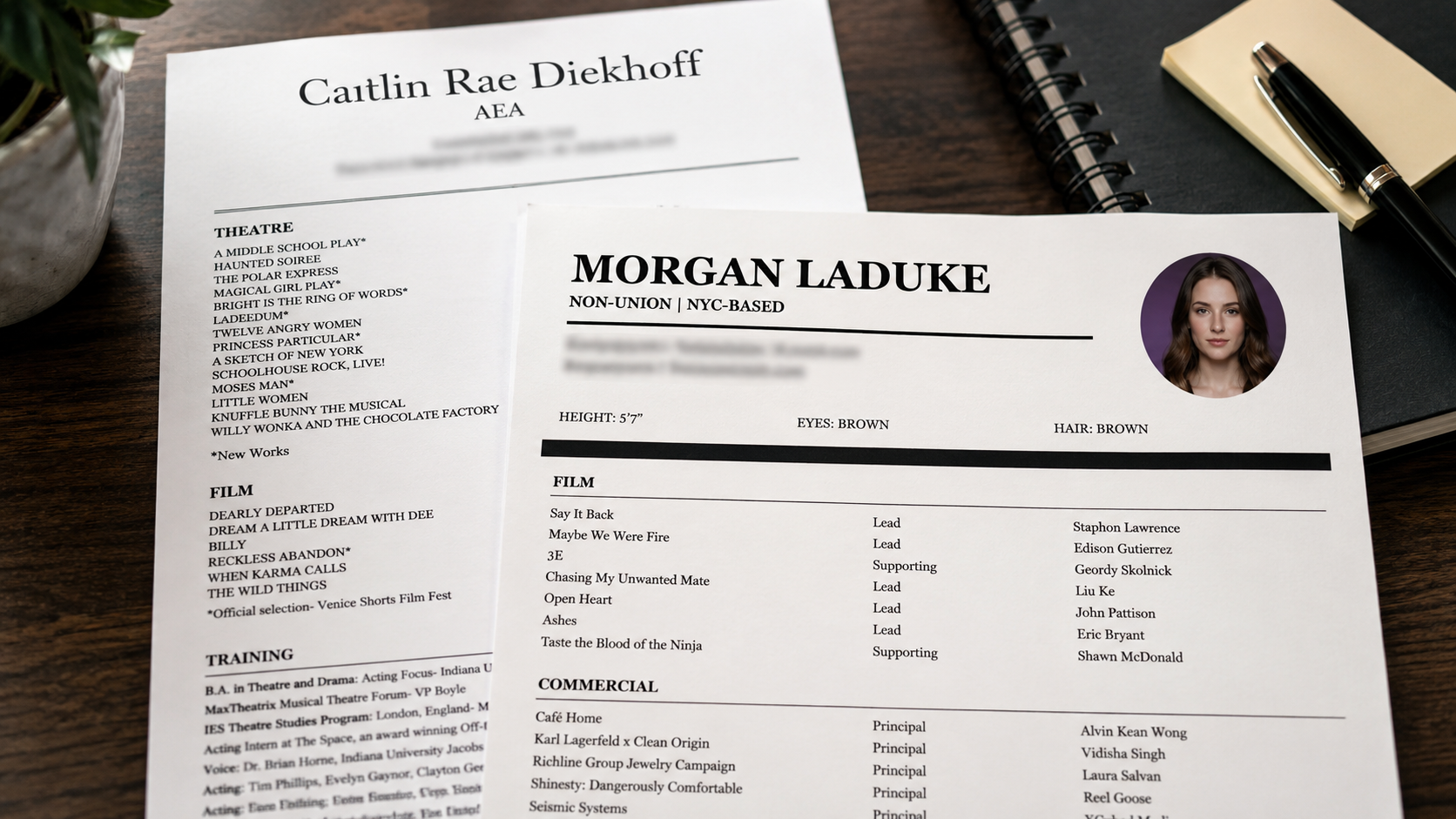
Resume Update: Industry Standards That Still Matter (and Why They Affect Your Submissions)
When we first published Formatting Your Acting Resume: How to Present Your Work Like a Pro, our goal was to help actors create resumes that looked clean, professional, and easy for industry professionals to read.
Unfortunately, we're still seeing one issue come up over and over again: actors are formatting credits using terminology that doesn't reflect industry standards.
While some people dismiss resume formatting as "just a matter of opinion," it really isn't. Your resume is one of the first things an agent, casting director, producer, or director sees. If the terminology is inaccurate, it can signal that the actor either hasn't been properly guided or doesn't yet understand how the industry classifies roles.
No one is going to refuse to cast you because you wrote "Supporting" instead of "Co-Star." But details matter. Your resume should demonstrate that you understand the business you're trying to work in.